



New construction in DFW: what to know before you build
Building a new home is one of the most exciting decisions a family can make. It is also one of the most layered. There is a rhythm to a build, and a handful of moments inside that rhythm matter more than most buyers realize.
This is a plain-language look at four of them: the easiest time to get a build right, how new construction works for veteran families in DFW, what happens to your property taxes in year two, and how to handle selling your current home while a new one is going up. None of this is meant to slow you down. It is meant to help you walk in clear.
When is the easiest time to get a new build right?
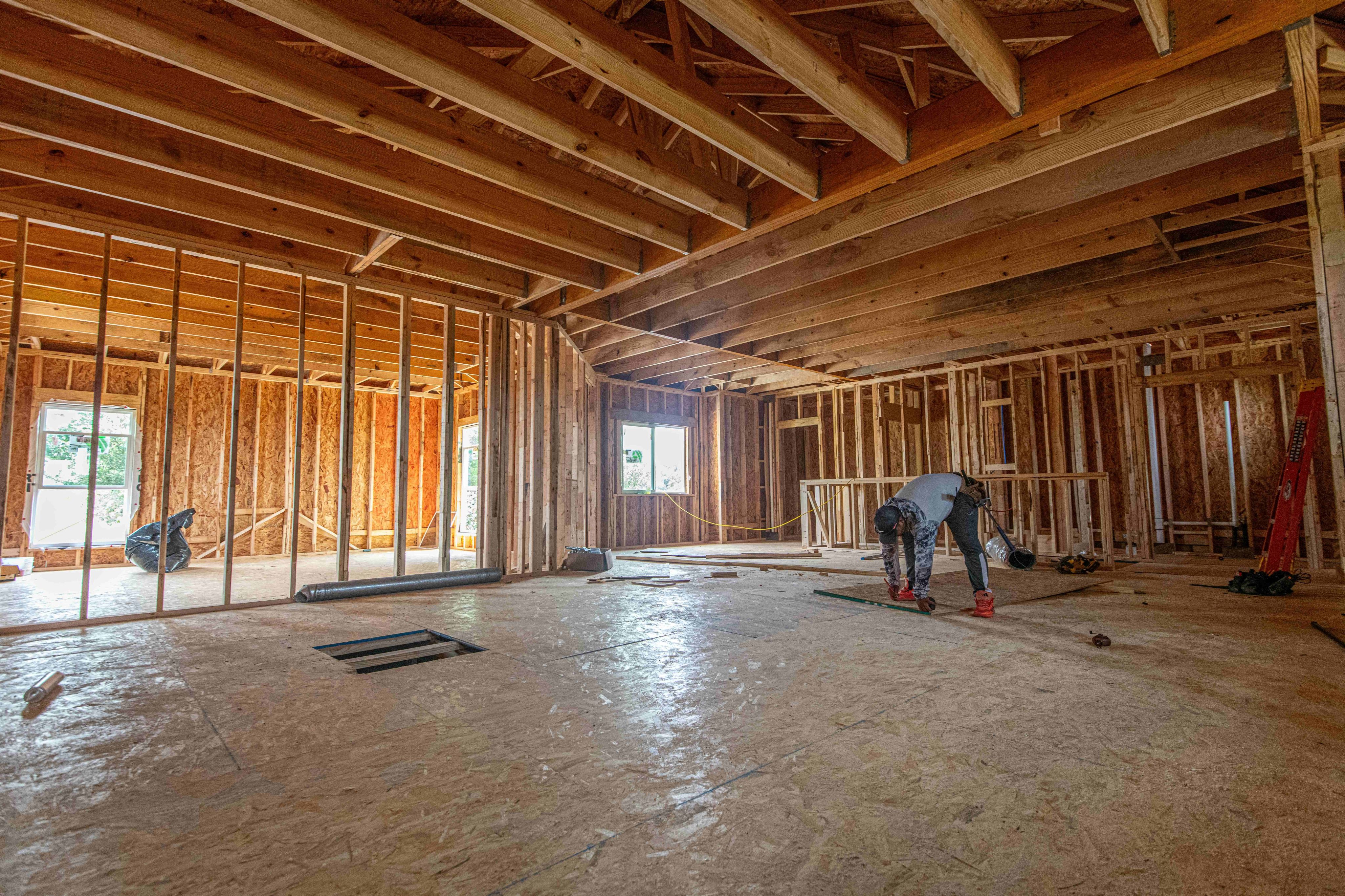
The easiest time to get a new build right is early, at the framing walk, well before closing.
The framing walk happens before insulation, before drywall, and before any of the finish work goes in. It is the one point in the timeline where the structure of the home is fully visible:
- Plumbing rough-in locations
- Electrical layout and outlet placement
- Window framing dimensions and placement
- Stairway construction and support
- Insulation approach and preparation
At this stage, small adjustments are simple to make, because nothing is covered yet. A good builder welcomes this walk. It protects the family and the builder, and it keeps everyone working from the same picture before the finish work begins.
Many buyers do not realize they can ask for a framing walk, so unless their broker or inspector requests it, it often does not happen. In our new construction work, we treat it as a standard milestone, not a bonus.
From there, a strong new construction process usually includes a few more checkpoints:
- A pre-drywall walkthrough (sometimes combined with the framing walk, depending on the builder)
- A final walkthrough before closing
- A 30-day post-close punch-list appointment
Each checkpoint catches a different category of detail. None of them should be treated as optional. The framing walk is simply the easiest point to look closely, because after drywall goes up, some adjustments take more time and coordination for everyone involved.
How does new construction work for veteran families in DFW?
It works for many veteran families, and it is underused.
VA loans can be used for new construction in Texas under certain conditions. The builder and the property need to meet VA Minimum Property Requirements, and the lender has to be comfortable working in that specific VA new construction lane. VA appraisals on new construction also follow their own process and timing compared with conventional loans and resale.
The lender pool that truly understands the intersection of VA financing and DFW builder contracts is narrower than the overall market. That matters.
Here is what I do, and what I do not do, in this space.
I am a Texas broker. I have guided more than 600 veteran families to closing. I am not a loan officer. I do not determine what you qualify for, what your VA funding fee looks like, or how a service-connected disability affects any potential fee waiver. Those specifics come from a licensed lender who knows VA new construction inside and out.
What a buyer's broker handles at this intersection:
- Confirming that the builder and property type meet VA Minimum Property Requirements before the contract is signed
- Managing the timeline between the VA appraisal process and the builder's delivery schedule
- Making one introduction to the right lender for your situation when the financing conversation begins
Nobody benefits when a VA entitlement, a builder timeline, and an appraisal process collide at closing. Getting those lined up early is the whole point.
What does year two property tax look like on a new build in Texas?
Year one is often based on the land plus whatever portion of the home was finished as of January 1. Year two is when the appraisal district catches up to the full, finished home, and that second-year jump can be significant.
In some cases, the first tax bill reflects close to the lot alone. The year one payment can feel manageable, sometimes more manageable than it will stay. In the range we have seen, that year two step-up often lands somewhere around 30% to 50%, because you are going from a partial or lot-only assessment to the complete home plus the land.
A few realities to hold:
- Appraisal district timing and methods vary by county, even though every county operates under Texas law.
- What year two looks like in Collin County will not match the same calculation in Denton, Ellis, Rockwall, or anywhere else one for one.
- Your lender's escrow projection may or may not fully account for that second-year step-up.
Getting the number right takes three inputs: the county, the local assessment patterns, and your build's delivery timeline. That county-specific math is part of every Momentus new construction engagement. We also encourage every client to review tax questions with a qualified tax professional, because property taxes are both local and highly regulated.
Should you sell your current home while your new one is being built?
Most new construction timelines run nine to twelve months, and that creates a real timing question on the sell side.
Sell too early and you may carry two housing payments for months. Sell too late and you are scrambling for somewhere to live right as the builder is ready to close.
Most families working through this gap choose one of four paths:
- A contingent offer on the new build
- Short-term bridge financing during the build period
- Sell first, then rent as an interim step
- A simultaneous close timed tightly to the builder's delivery
Each path carries different tradeoffs in cost, flexibility, and risk. The right answer depends on your equity and cash position in your current home, your tolerance for temporary housing or multiple moves, your lender's bridge or recast options, and how predictable your builder's timeline actually is, not just the general timeline you first saw.
For veteran families, VA entitlement and any remaining entitlement after a prior purchase add another layer that general financing analysis often overlooks. For downsizers moving into a 55-and-older community, the Texas over-65 property tax ceiling (the freeze) and how it interacts with the new home's assessed value is its own calculation.
The right path is specific to a family's numbers, not generic to the situation. That modeling is something your broker and your lender should be doing together.
If you want to think through your own situation
If you want to think through your own build instead of guessing from a flyer, reach out. My team and I will walk you through it.
Here is what that looks like:
- 45 to 60 minutes, virtual.
- We walk through your goals, your timelines, and your numbers.
- Within 24 to 48 hours, your written Momentus Roadmap arrives in your inbox.
Your Roadmap lays out where you stand today, what your next 90 days realistically look like, and what your real options are.
You do not need to have picked a builder. You do not need to have a community selected. If you are 18 months out and quietly running comparisons online late at night, that is allowed. If you are already in a builder contract and rethinking what you signed, that is allowed too. Some of the strongest Momentus engagements begin mid-process.
Reach out to our team at [email protected].
Love your home. Love your journey.
Maureen Cappallo Broker and Founder, Momentus Real Estate Group TREC Brokerage License #9014872
Equal Housing Opportunity. Serving Collin, Denton, Tarrant, Dallas, Ellis, Kaufman, Rockwall, and Grayson counties.
Maureen Cappallo is a Texas real estate broker, not a loan officer. Lending terms, qualification, VA entitlement, and financing specifics are confirmed by a licensed lender. This article is for educational purposes only and does not constitute legal, tax, or financial advice. Momentus Real Estate Group is not affiliated with, endorsed by, or sponsored by any builder, developer, or master-planned community referenced herein.